Prepared for Dave Hanson and the Rocket Exhaust team
Factory level performance. Now for the back office.
You redesigned the horsepower. This is a first look at redesigning the work around it: orders, build sheets, fitment questions, refurbs, and the numbers that tell you what to build next.
01 / The business as we read it
A small shop with a big catalog
Rocket Exhaust builds aftermarket exhaust systems for four-stroke dirt bikes and pit bikes in Apache Junction, Arizona, and sells them straight to riders through its own store. The Elite Series relaunch puts a redesigned line in front of a market that already knows the name.
Counted from the public Rocket Exhaust store catalog on November 16, 2026.
What kind of business this is
In manufacturing terms it is high mix, low volume, and sold direct. That shapes everything else.
Fitment drives the catalog
One muffler design fans out across model years and platforms: CRF, YZ, KX, RM-Z, the KTM, Husqvarna and GasGas family, Triumph, and the pit bikes. Every new model year adds listings to keep straight.
Every pipe is a small build
An Elite order is a head pipe, a mid pipe, a RAW or Black canister, one of seven decal colors, and sometimes a custom name and number. One Elite listing covers 28 combinations.
The product keeps working after the sale
Jetting specs, install steps, quiet cores, spark arrestors, re-packing, and a $149.95 refurb service. Riders come back with questions and with pipes.
A few people wear every hat
We expect a small crew covering fabrication, assembly, shipping, the phone, the inbox, social, and the store. Time spent on paperwork is time off the bench.
Demand moves with the race calendar
New model releases, the start of the season, and a magazine test all pull orders forward. Knowing which platforms are moving decides what to build ahead.
A relaunch means everything is in motion
New product, new photos, new listings, older Racer Series pipes still in the field. It is the best time to set up clean systems, and the easiest time for details to slip.
02 / How the work flows
Six workflows, as we think they run
This is our outside read of a day at Rocket Exhaust. The steps come from what the store and policies describe. The friction points are educated guesses for you to correct.
Order to ship
- Order lands in the store
- Someone reads the options: canister, decal color, extras
- Head pipe, mid pipe and muffler are pulled
- Decals go on, hardware is bagged, pipe is boxed
- Label printed, out the door inside 72 hours
Likely friction: the options live in the order text, so each build is read and re-keyed by hand.
Custom name and number
- Rider adds the $19.95 option at checkout
- Pipe ships now with standard stickers
- Name and number are confirmed with the rider
- Custom decals are produced
- Decals ship direct, two to three weeks later
Likely friction: a second shipment per order with its own clock, easy to lose track of once the pipe has gone.
Fitment and tech questions
- Call, email, or message: "will it fit my bike?"
- Check year, make, model and the fits list
- Answer on slip-on or full system, quiet core, spark arrestor
- Follow-ups on jetting and install
Likely friction: the same questions answered from memory by whoever picks up, between 8 and 4.
Refurb and returns
- Rider calls or emails for an RMA number
- Pipe arrives and is inspected
- Extra parts are quoted before work starts
- Re-pack, tighten, buff, repair cracks, new decals
- Return shipping to the lower 48
Likely friction: RMA numbers, quotes and approvals tracked across the phone, the inbox and a notepad.
New model year, new fitment
- Get the bike, build and test the pipe
- Assign the part number
- Shoot photos, write the listing and the fits list
- Add it to the right collections and the year, make, model search
Likely friction: each listing is built by hand, so small differences creep in between them.
Athletes, test bikes and content
- Rider support and product for the team
- Results come in from WORCS, hare and hound, and the track
- Filming days and test bike builds
- Posts, news, and magazine follow-up
Likely friction: good material that never gets posted because the shop is busy.
03 / What we could see from the outside
A catalog check
Software reads part numbers, product types, and collections, not photos. Before anything can be automated, those need to be consistent. Here is what the public catalog shows today. None of it stops a sale, and all of it is quick to fix.
Option combinations with no part number
Of 1,399 combinations in the store, this many carry no SKU. Most of them, 325, are the custom name and number version of a pipe that has one.
Listings where one part number covers every combination
On the YZ450F slip-on, for example, YA45018-R-SO is the SKU for RAW and Black in all seven decal colors. The bench cannot tell the build from the part number, and neither can a report.
Products with no product type
Of 82 products, this many are not marked as an exhaust, a part, or merch. Sales by category cannot be totaled until they are.
Makes with two collections each
Honda and HONDA, KTM and KTM, GasGas and GAS GAS, and so on. Four more collections are empty: Beta, Levers / Pegs, suzuki, TM.
Loose ends a rider can see
The refund policy still reads [INSERT RETURN ADDRESS]. The year, make, model search shows a "Translation missing" label on the home page. One KTM 250 full system carries the slip-on part number KT25023-R-SO. The footer says 2025.
04 / Where to streamline
What to hand over, and what stays on the bench
The rule we use: automate work that is repeatable and cheap to get wrong, keep a person approving anything that costs money or a customer, and leave the craft alone.
| The work | Today, as we assume | Streamlined | How much to hand over |
|---|---|---|---|
| Build sheets | Options read off each order and pulled from memory | Every order becomes a pick list with the right pipes, canister, decal color and extras, and a ship-by clock | Automate fully |
| Custom name and number | Tracked separately after the pipe ships | A second ticket opens on its own, with the rider's text, the decal color, and a due date | Automate person proofs the decal |
| Fitment and tech replies | Answered one at a time from memory | AI drafts the reply from your fits lists and Tech page. Staff read it and send | AI drafts, you send |
| Refurb and RMA | Phone, inbox, and notes | One intake form, an inspection checklist that builds the quote, and a hold until the rider approves | Automate rider approves the quote |
| New listings | Built by hand per fitment | A template fills the title, fits list, part numbers, collections and warnings from one line of input | AI drafts, you publish |
| What to build next | Feel, plus what just sold out | A weekly read on which platforms, finishes and decal colors are moving | Automate fully |
| Race results and posts | When there is time | AI turns a rider's results text into a draft post in your voice | AI drafts, you post |
| R&D, testing, welding, sound | Dyno, track, and trained hands | Unchanged. This is the product | Stays with you |
| Rider relationships | Personal | Unchanged | Stays with you |
05 / Custom apps
Four tools, built around your product
These are working examples you can click through. The catalog, fitments, prices, and part numbers are read from your public store. The orders, riders, and sales figures are invented.
A / Build sheet
Each order becomes a sheet for the bench: the exact canister and decal, the parts to pull, and how long is left on the 72-hour clock. Pick an order, tick off the parts, and move it down the line.
 Build sheetWorking example / invented orders
What it reads: the order's product and options from your store. What it needs first: one part number per build, as in section 03. The component part numbers shown are examples. Yours would come from your own parts list.
B / Fitment desk
Whoever picks up the phone gets the same answer in seconds. Choose a year, make and model. The matches come from your published fits lists, and the reply is ready to send.
Fitment deskWorking example / your catalog, read Nov 16Draft reply to the rider
In a real build: AI writes the reply from the rider's actual question, your fits lists and your Tech page, and a person reads it before it goes. Here the reply is a template filled in from your catalog. The same lookup could answer on your site after hours.
C / Refurb bench
One place for a pipe that comes back. The inspection builds the quote, and work that costs the rider extra waits for their approval, as your refurb page promises.
Refurb benchWorking example / your published prices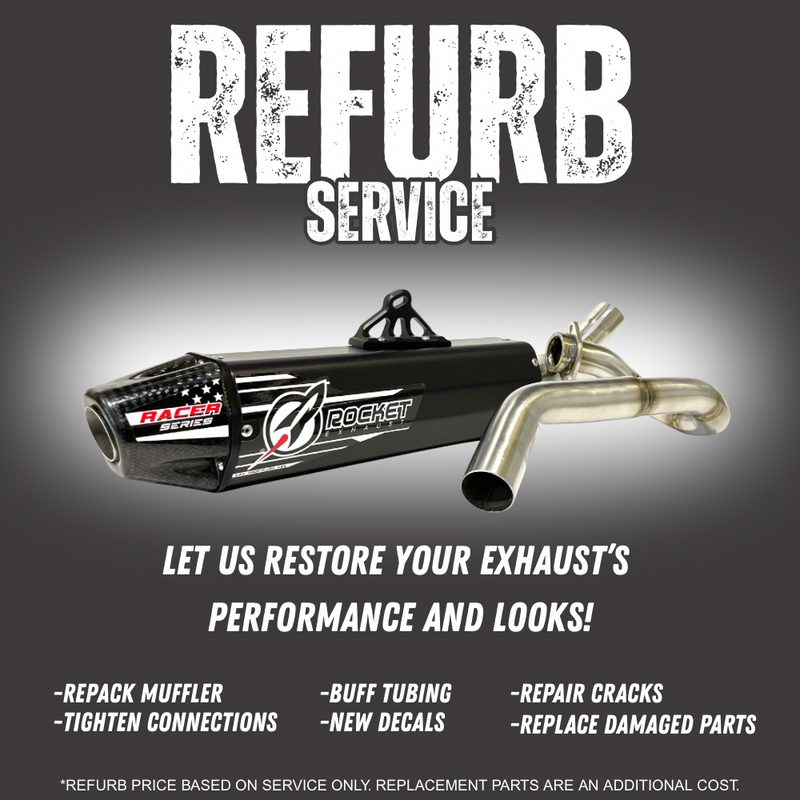 Found at inspection
RMA R-1187
Invented rider / pipe received at the shop
Message to the rider
Prices used: Refurb Service $149.95, Outlet Tip/End Cap Set $119.95, Replacement Rivets $9.95, from your store. Which findings are billable is our guess. You would set those rules.
D / What to build next
A weekly read on what is moving, so head pipes and canisters are on the shelf before the orders land. The figures below are invented to show the shape of it.
Shop numbersWorking example / invented figuresSystems shipped by make
Last 90 days, units
Decal color
Share of Elite orders, percent
What it would read: orders from your store, once each build has its own part number. Who sees it: you decide. Sales figures for the owner, build counts for the bench.
06 / The path
Five steps, in order
Each step is useful on its own and makes the next one possible. Nothing here needs you to change how you build a pipe.
- 01
Square up the catalog
One part number per build, a type on every product, one collection per make, and the loose ends closed.
- 02
Lock down the accounts
Every person on their own sign-in with a second factor, for the store, email and shipping. Know which apps can read customer data.
- 03
Build sheets
Orders become pick lists and the custom decal track opens on its own. The first tool the bench touches every day.
- 04
Fitment desk and refurb bench
Faster answers for riders, and every returned pipe tracked from RMA to return shipping.
- 05
Shop numbers
A weekly read on what is moving, used to plan builds ahead of the season and new model years.
Where the risks are
- Tools like these hold rider names, addresses and order history. They need real sign-in and backups before real data goes in.
- An AI-drafted fitment answer that is wrong costs a return and a rider's trust. A person sends every reply until it has earned otherwise.
- Anything connected to the store can change the store. Each tool gets its own limited access, never the owner's login.
What we would not touch
- Stepped head pipes, the canister design, and the sound. That is the product.
- Dyno and track testing, and deciding when a pipe is ready.
- Your riders, and how you talk to them.
- The final call on any quote, refund, or reply.
Next: tell us where we got it wrong
This is a read from the outside. A walk through the shop and an hour with whoever runs orders would turn the guesses into a plan built on how Rocket Exhaust really works. Reply to the person who sent you this page to set that up.
- Correct our workflow guesses
- Pick the first tool to build
- Agree what stays manual
- Keep everything we write up